2010 July | Coptalk.Info - What you do not know will shock you!

Archive for July, 2010

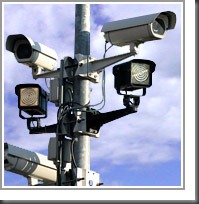
Ask a Cop? Photo Ticket Enforcement

Red_Light_Camera

—–Original Message—–
From: Sue
Sent: Friday, July 30, 2010 8:58 AM
To: info@coptalk.info
Subject: Photo-ticket enforcement

In the process of moving from VA to MD I needed to drive through DC. While doing so, I’ve racked up several tickets from a photo-enforcement speeding camera (two tickets, both at the same camera set-up). Both tickets are on my VA plates and I’ve seen the photos of the infraction online. The way I know about these tickets is that I’ve received a failure notice and the fine has now doubled. I don’t know if it got lost in the mail or my mail-forwarding is slow. Anyway, I got on the DC site to investigate the ticket and learn I had the second one (no notification was sent to me). The delinquent notice, curiously, was directly addressed to me at my new address in MD). So the second ticket is now in danger of becoming delinquent, too. This is unfair.

Anyway, two days ago I gave up my VA license and car registration and now have MD plates and license. Will these tickets follow me to MD? DC will report them to VA, but will they report them to MD?


First off, I’d get all the documentation of your move together (locations, dates, etc) and contact the court. If you can prove that you were in the middle of a move and that you and the notices must have crossed paths while traveling, they might be sympathetic enough to waive the penalties. Being that you never received the original notice and yet the delinquent notice went to your new address shows that you notified the Post Office of your move and requested that they forward your mail. If you get a copy of the request of address change (or made a copy for yourself) that could help to show that you made an effort to get mail to your new address.  

In this economy, courts may not be as inclined to waive fees as much as they might have in the past but fair is fair. If you can prove that you were moving and never got the notices, I’d hope that they at least waive the penalties. It’s not like you just blew off the tickets.

As for one State notifying another of tickets, your VA license will show as surrendered to VA and when you apply for a license to MD, they will more than likely look up your license history there. Any violations you are convicted of will show up as violations against your VA license but will not show as violations against your new MD license. If you do nothing you will automatically be found guilty and a small warrant could be issued for your arrest from VA. Not that they’d extradite you for a small traffic violation but it could be on your record forever.

Best thing to do is to call the court, ask for a supervisor, explain your situation, and hope for a sympathetic ear. Some courts allow a judge to decide a trial by sending in a letter explaining your side of the story if you are unable to appear, such as being out of state. Call the courts and see what you can do. Let us know what happens.      

Some additional notes:

This could be different in your specific city, county or state. Some states like Arizona have banned Photo Enforcement or have very specific guidelines that pertain to how tickets need to be issued.

It is best to really look into your specific local laws to make sure our suggestions pertain to your specific area.

4 tips to protect you from ATM thieves

4 tips to protect you from ATM thieves

By Constance Gustke • Bankrate.com

Highlights

· "The technology of the bad guy is getting better and better every year."

· Hidden cameras are disguised so they can pick up your password.

· You must report fraud within 60 days to limit your liability.

ATMs are under siege more than ever from skimming. Skimming, where ATM thieves steal your PIN and account number using remote devices, is increasing dramatically. Often done by sophisticated crime rings from the Eastern bloc countries, ATM skimming is becoming a high-tech art that’s hard to detect.

That’s bad news for consumers. Experts say that losses from skimming are approaching $1 billion. Nearly one in five fraud victims reported having their credit card PIN or debit card ATM PIN information stolen in 2009, according to Javelin Strategy & Research. And Robert Vamosi, an analyst handling risk, fraud and security at Javelin, sees ATM skimming continuing to rise this year and next.

"Consumers aren’t aware of ATM tampering," he says. "ATMs have 40 years of trust."

Skimming isn’t new. It’s been around for at least 10 years. What has changed is that the "technology of the bad guy is getting better and better every year," says Robert Siciliano, a security expert based in Boston. "It’s up to consumers to watch their own backs."

Typically, ATM thieves use two devices to capture your PIN and card data. One device sits near where you swipe your card and reads the magnetic stripe on your card with your account number. Even more confusing, the device mimics the card slot. "The technology has evolved to a point where the molded plastic fits like it belongs there," says Siciliano. Devices are even readily available over the Internet for as little as $300.

A camera, hidden from view, captures the PIN. "You can get the data in real time," says Siciliano. "You can be in your car with a laptop remotely accessing the device."

Thieves then burn the data onto a blank card to access your money.

U.S. Secret Service spokesman Max Milien wants consumers to be warned. "The public is notified after an event," he says. And don’t take bank security for granted. Fraud can occur at any bank in any part of the country. Thieves are even sending out false text alerts to get consumer data.

Banks, they say, are slow to adopt anti-skimming measures. When Javelin surveyed 25 banks, four stood out, though, for their anti-theft measures. They are Bank of America, Chase, Citibank and Wells Fargo.

advertisement

Experts add that debit card users are most at risk. Typically, consumers must report fraudulent charges within two days, limiting your liability to $50. If you report ATM skimming fraud within 60 days, you’re liable for the first $500 of any transaction. Siciliano adds that thieves carefully orchestrate ATM withdrawals, maxing out cash withdrawals one day and waiting until after midnight for the next stash, which quickly adds up.

Here are four tips to help you protect your account.

1. Cover your password with your hand

Hidden cameras are disguised so they can pick up your password. By protecting it, ATM thieves can’t access your account.

2. Use familiar ATMs and limit your visits

ATMs in dimly lighted spots or used late at night could be more susceptible to fraud, while ATMs under video surveillance can be safer. Stay away from ATMs at retail stores or restaurants, adds Siciliano. Recently, skimming devices were found on ATMs in a popular grocery store in central Florida. Airports, convenience stores or kiosks are equally vulnerable to ATM thieves. Still, even highly trafficked ATMs outside a bank branch have been targeted by thieves.

Also, try to limit your visits to the ATM. "With frequency, there’s risk," says Siciliano.

3. Check bank balances frequently

Given the two-day window for reporting fraud, it pays to check your account frequently. If you don’t report fraud within 60 days, you have unlimited liability. "Sign up for alerts and notice unusual withdrawals," says Vamosi.

With credit cards there are more protections in place, and you can dispute charges."You have at least a billing cycle," says Siciliano.

4. Observe the ATM

Vamosi cautions consumers to look at an ATM to make sure a card slot is "legitimate and not tacked on." Look for things that strike you, he says. "Some people have felt that when they inserted their card, something went awry," he says. In that case, try another ATM.

When protecting your account against ATM thieves, "it’s all about awareness, paying attention and understanding risks," says Sicilano. "There are 400,000 ATMs and every one of them is susceptible to fraud. The speed and convenience of technology has replaced the security of technology."

Next Page »